
+91 77607 78808 N T Road, beside MedPlus, Shimoga
Mon–Sat · 10:30 am–1:30 pm & 5–9 pm
Home / Treatments / Root Canal Treatment
Root canal treatment in Shimoga

Root Canal Treatment (RCT) in Shimoga

Toothache, swelling or sensitivity that does not go away may mean the nerve of the tooth is infected. Root canal treatment can relieve the pain and help you keep your natural tooth.

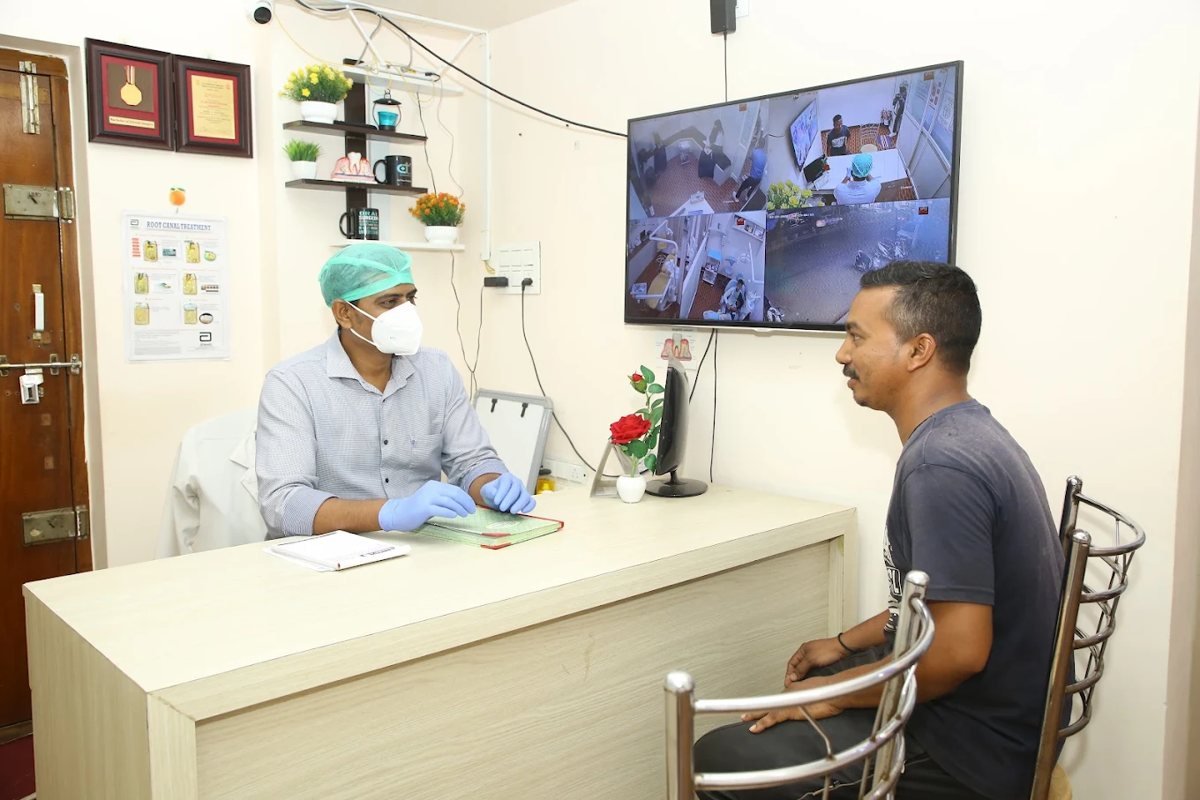
Dr. Abdul Haseeb Quadri explaining treatment to a patient during a consultation in Shimoga

What is root canal treatment?

Inside every tooth there is a soft tissue called the pulp, which contains nerves and blood vessels. When deep decay, a crack or an injury allows bacteria to reach the pulp, it becomes inflamed or infected and can cause severe pain and swelling. Root canal treatment, also called endodontic treatment, removes the infected pulp, cleans and shapes the canals inside the root and seals them, so that the tooth can be saved instead of extracted.

Signs that you may need a root canal

  • Severe or throbbing toothache, especially at night
  • Lingering sensitivity to hot or cold after the stimulus is gone
  • Pain when biting or pressing on the tooth
  • A pimple-like swelling (gum boil) or swollen gums near the tooth
  • Darkening of a tooth, or a deep cavity or broken tooth
  • Sometimes there are no symptoms and the problem is found only on X-ray

How the treatment is done

After examining the tooth and taking an X-ray, the area is numbed with local anaesthesia. A small opening is made in the tooth, the infected pulp is removed, and the canals are cleaned, shaped and filled. The tooth is then sealed with a filling. Depending on the tooth, treatment may be completed in one visit or may need two or more visits. A root-canal-treated tooth is weaker than before, so it is usually protected with a crown or a strong filling.

Is a root canal painful?

Modern root canal treatment is done under local anaesthesia, and most patients say the procedure feels similar to having a filling done. Some tenderness for a few days afterwards is normal and settles with simple medicines. The pain people associate with root canals usually comes from the infection itself, not from the treatment that relieves it.

Why not simply extract the tooth?

Saving your natural tooth is generally better for chewing, appearance and the health of your jawbone. Removing a tooth leaves a gap that may need an implant, bridge or denture later. When a tooth cannot be saved, we will tell you so and discuss replacement options.

This page is for general information and is not a substitute for a dental consultation. The right treatment, the time it takes and the result depend on your individual condition, and will be explained after examination.


What to expect

How your treatment works

Examination & X-ray

We find the cause of your pain and check how far the infection has spread.

Numbing

Local anaesthesia so that you are comfortable.

Cleaning the canals

Infected pulp is removed and the canals are cleaned and shaped.

Sealing

The canals are filled and the tooth is sealed.

Crown or filling

The tooth is restored and protected for everyday chewing.

Your dentists

Who will treat you

Dr. Prof. Abdul Haseeb Quadri, oral and maxillofacial surgeon in Shimoga

Dr. Prof. Abdul Haseeb Quadri

BDS, MDS · Oral & Maxillofacial Surgeon & Implantologist

Leads surgical, implant and jaw cases at the clinic.

Read profile
Dr. Shaheen Kousar Quadri, dental surgeon in Shimoga

Dr. Shaheen Kousar Quadri

Dental Surgeon

Looks after general and restorative dentistry for adults and children.

Read profile
Questions

Root Canal Treatment — FAQs

How do I know I need a root canal treatment?

Persistent toothache, pain on biting, lingering sensitivity to hot or cold, swelling and gum boils are common signs, but only an examination and X-ray can confirm it. Please do not wait for the pain to become severe.

How many visits does a root canal take?

Often one to three visits depending on the tooth and the infection. Your dentist will tell you before starting.

Are there any side effects after root canal treatment?

Mild soreness or tenderness for a few days is common. Please contact us if you have severe pain, swelling or fever after treatment.

Will I need a crown after a root canal?

Often yes, particularly for back teeth, because a treated tooth is more likely to fracture. Your dentist will advise you.

What does root canal treatment cost in Shimoga?

The cost depends on the tooth, the number of canals, the number of visits and the type of crown or filling needed. You will get a clear estimate after examination.

Ready to take care of your smile?

Call or WhatsApp us to book a consultation at our Shimoga clinic. We will be happy to guide you.