
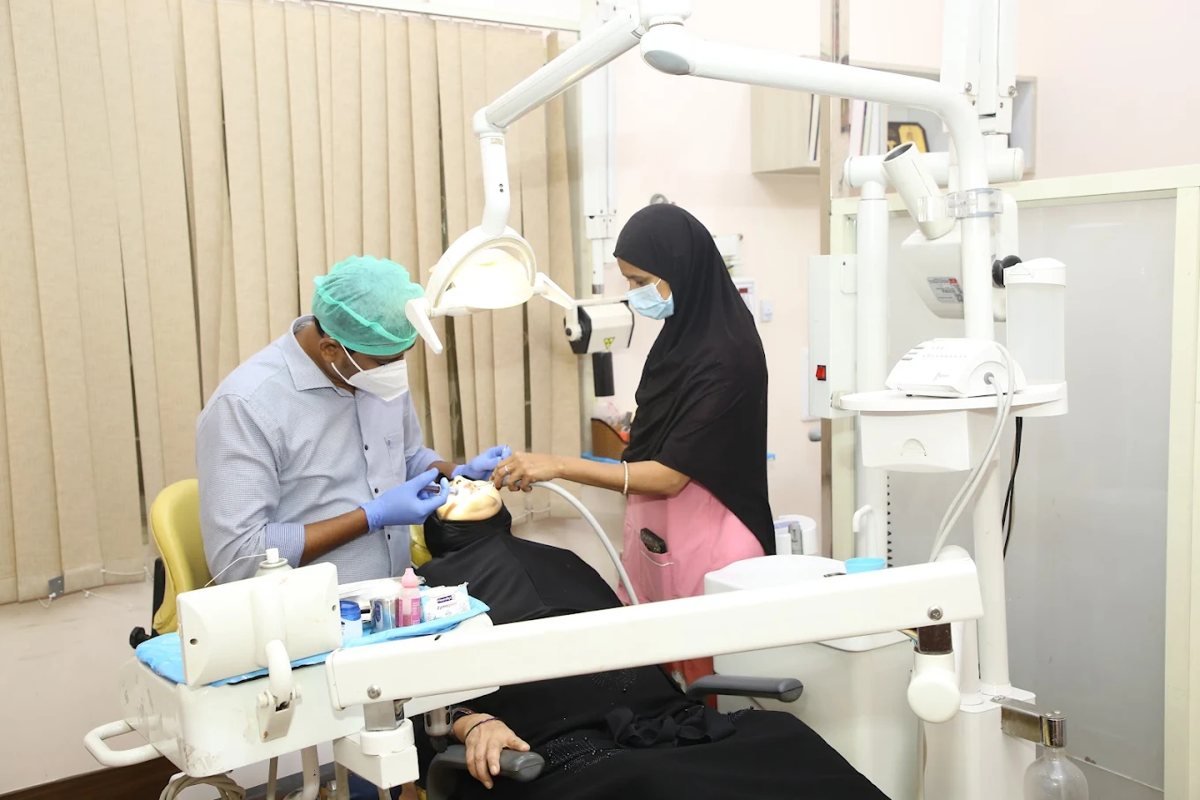
What are wisdom teeth?
Wisdom teeth, or third molars, are the last teeth to come through at the back of the mouth, usually between the late teens and mid-twenties. Many people do not have enough room for them, so they can grow at an angle, stay partly under the gum or press on the tooth in front. This is called an impacted wisdom tooth.
When does a wisdom tooth need to be removed?
- Repeated pain, swelling or infection of the gum around the tooth (pericoronitis)
- Decay in the wisdom tooth or in the tooth next to it that is hard to clean
- A tooth that is impacted and damaging or crowding neighbouring teeth
- Cysts or other changes seen around the tooth on X-ray
- Difficulty opening the mouth or bad taste or odour from the area
Tooth extraction for other reasons
Besides wisdom teeth, extraction may be needed when a tooth is badly decayed or broken and cannot be saved, when gum disease has loosened it, after an injury, or to make room before orthodontic treatment. Our team always tries to save a natural tooth wherever possible and will explain why an extraction is advised.
How is the procedure done?
After a clinical examination and X-ray to check the position of the tooth and nearby structures, the area is numbed with local anaesthesia. A simple extraction removes the tooth from its socket with gentle movements. An impacted tooth may need a small surgical procedure in which the gum is opened and the tooth is removed in sections; this is routine for an oral surgeon. Stitches, if needed, are placed to help healing.
Recovery and aftercare
Some swelling, mild pain and a little oozing are expected for the first few days. You will be told how to bite on gauze, which medicines to take, what to eat and drink, and which things to avoid, such as spitting forcefully, smoking and using a straw for the first days. Healing is usually uneventful when these instructions are followed. If you notice severe pain, heavy bleeding, fever or increasing swelling, please contact us.
This page is for general information and is not a substitute for a dental consultation. The right treatment, the time it takes and the result depend on your individual condition, and will be explained after examination.