
What is professional teeth whitening?
Teeth whitening, also called bleaching, uses a peroxide-based whitening agent to lighten the colour of the teeth. Professional whitening is stronger and more controlled than over-the-counter products, and it is done after your dentist has checked that your teeth and gums are healthy.
Why do teeth change colour?
- Tea, coffee, cola and red wine
- Tobacco, paan and gutkha
- Ageing, as the enamel thins and the darker layer beneath shows through
- Certain medicines or fluorosis during tooth development
- Old fillings, injury or a root-canal-treated tooth that has darkened
Who is whitening suitable for?
Whitening works best on natural teeth with surface or mild-to-moderate stains. It does not change the colour of crowns, fillings or dentures, and results differ from person to person. Whitening is not suitable if you have untreated decay, gum disease or very sensitive teeth until these are treated, and it is generally avoided during pregnancy. Your dentist will tell you whether it is right for you.
The whitening procedure
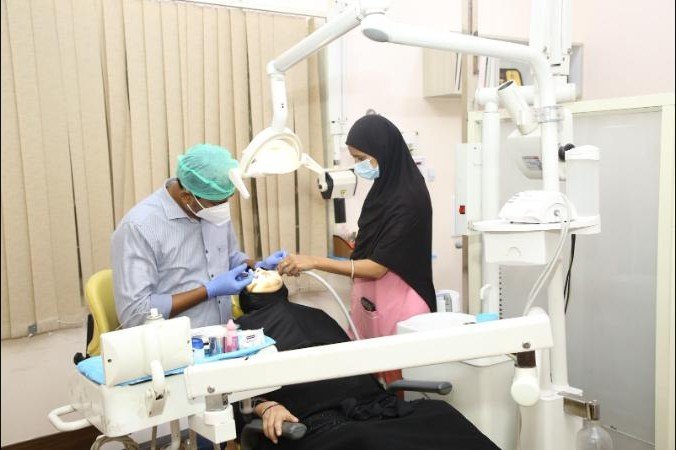
First, your teeth are examined and, if needed, cleaned to remove tartar and surface stains. The gums are protected, the whitening agent is applied to the teeth, and in some systems it is activated with a special light. The agent is left for a set time, rinsed off and, if needed, applied again. A visit commonly takes around an hour. You may notice a visible improvement in shade straight away, though the final shade varies.
Is whitening safe for my teeth?
When done by a dentist and used as directed, whitening does not damage tooth structure. Some people get temporary sensitivity or gum irritation for a day or two, which usually settles by itself. Whitening is not a substitute for cleaning, and the colour can fade again if you continue habits that stain the teeth.
Keeping your teeth bright
Brush twice a day, rinse after tea or coffee, cut down on tobacco, and have your teeth cleaned regularly. Your dentist may suggest a gentle whitening toothpaste or touch-up sessions.
This page is for general information and is not a substitute for a dental consultation. The right treatment, the time it takes and the result depend on your individual condition, and will be explained after examination.